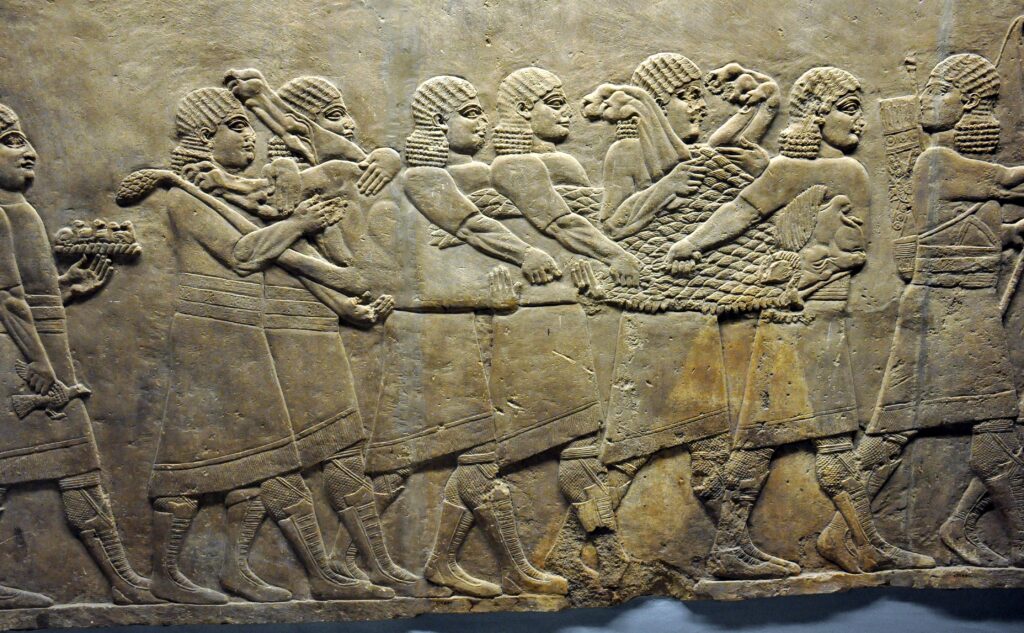
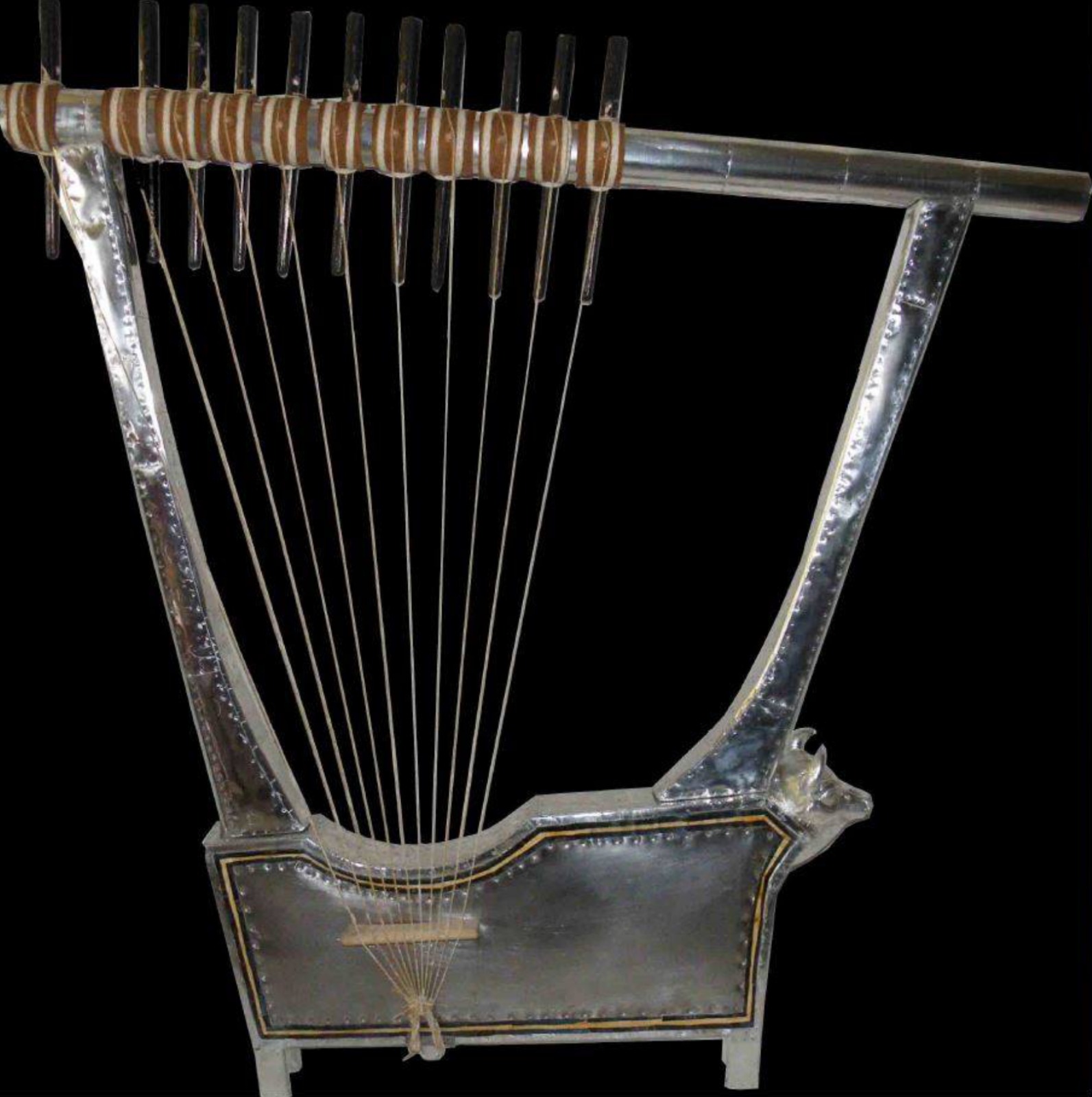
It might come as a surprise for Westerners who were taught that Greece was the cradle of Occidental music, that in fact, the earliest attestation of music comes from the land of Sumer in Southern Mesopotamia and dates from about 2,600 years BCE, that is some 2,000 years before the Greeks wrote their first treatises. None of these has reached us but only from very late unreliable copies and translations plagiarised from Mesopotamian knowledge. In around 2,300 years BCE, at Nippur and in the land of Elam, arithmetical quantification of pitches, as frequencies, was invented while the West had to wait almost 4,000 years for Heinrich Hertz to be credited with the invention of ‘his Herz’ system. By the early second millennium BCE, four thousand years ago, Babylonian had conceptualised a system for the creation of eight diatonic modes that eventually made their way through history as the eight ecclesiastical modes of the Christian Church. It is also later, in the first centuries of Christianity, that monks were sent to the levant to study what was to become what is erroneously called Gregorian chant. The Sumerians have left us with an important archive of various hymns, lullabies, drinking songs and others. Mesopotamia and Elam have produced a great variety of musical instruments which mainly have survived with the iconography with the exception of lyres, harps and pipes, excavated from the tombs of Ur, restored and now hosted in the British museum, the Philadephia museum and the Iraqi museum. The earliest song ever notating was discovered in Northeast Syria at the site of Ugarit and is dated to 3,400 BCE. The music and lyrics were deciphered about 30 years ago by Richard Dumbrill and is available of Youtube interpreted by the Armenian soprano singer Sevan Habib.
“Richard Dumbrill, 2025”
Ancient Beginnings
Cultural Evolution
Music Legacy